
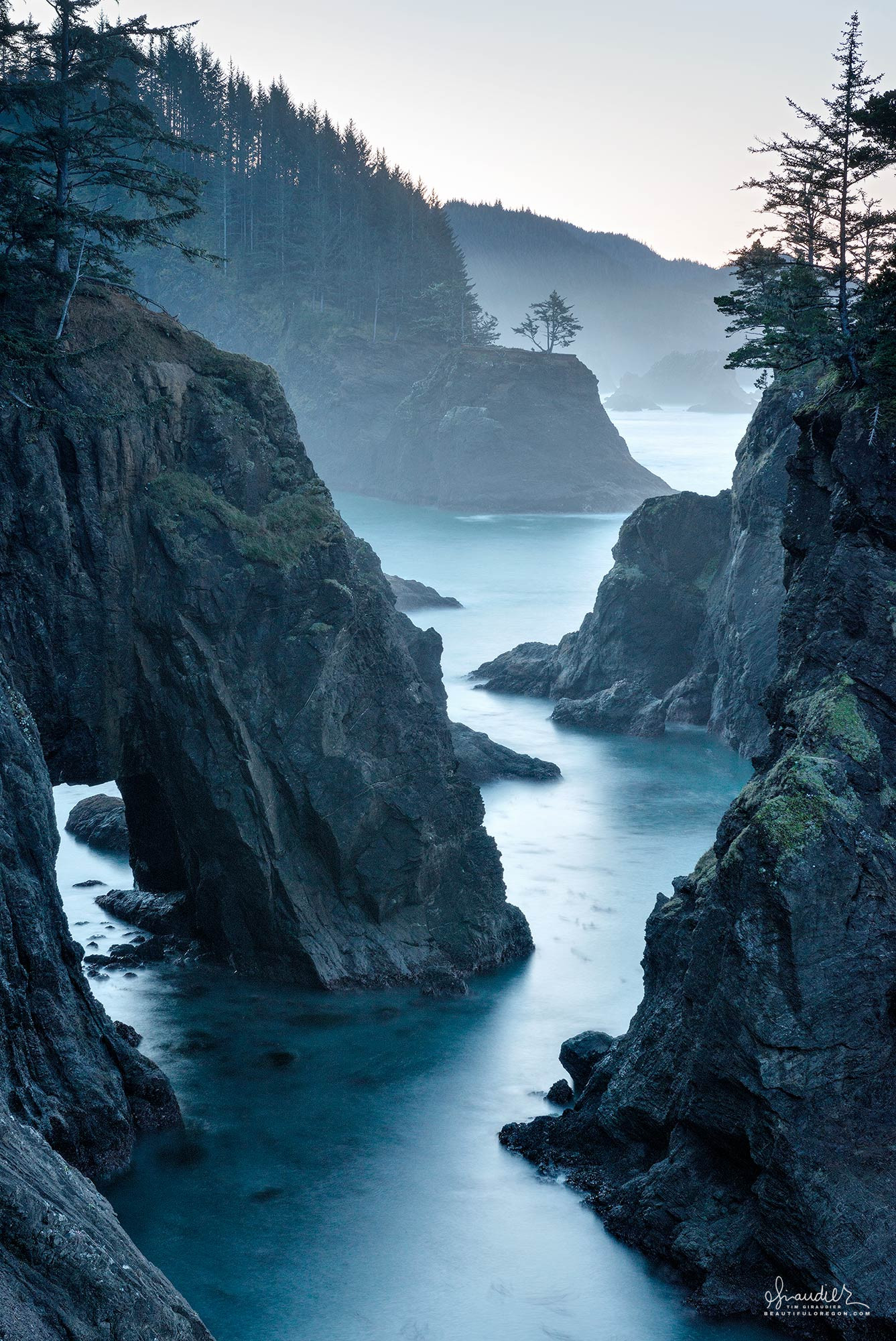
Boardman State Park Oregon South Coast
$ 49.50
• Shipping: Immediately available 2 pcs
• Pickup: Immediately from store in Kaarina, Finland
• Pickup: Immediately from store in Kaarina, Finland
With a slack tide and soft morning light, the beautiful sea stack arches of Samuel Boardman State Park. Natural Bridges Samuel H. Boardman State Park, Oregon South Coast. If interested in purchasing gift cards / note cards of this image, you can find them in my Greeting Card Gallery here. Boardman State Park: Oregon’s South Coast Gem: Stretching for twelve miles along Oregon’s rugged south coast, the Samuel H. Boardman State Scenic Corridor is one of the most dramatic coastal landscapes in the Pacific Northwest. Situated between Brookings and Gold Beach, the park is a ribbon of forested headlands, secluded beaches, and striking offshore rock formations. Among its most iconic features is the Natural Bridges Overlook, a geologic marvel that encapsulates the forces of wind, wave, and tectonic uplift that have shaped this coastline for millennia. Unlike many Oregon state parks that encompass a single large tract, Boardman State Scenic Corridor is a mosaic of headlands, coves, and cliffside pullouts connected by U.S. Highway 101. This linear design was intentional. When the park was formally established in 1957, the goal was not to create a singular destination but to preserve a continuous coastal experience. The park was named for Samuel H. Boardman, Oregon’s first State Parks superintendent, who envisioned a chain of scenic waysides and natural preserves extending down the coast. Boardman’s tireless advocacy helped protect lands that might otherwise have been lost to private development. The corridor today spans more than 1,400 acres of temperate rainforest and shoreline. It remains a place where the meeting of land and Pacific Ocean is immediate and unfiltered, where trails lead within minutes from highway overlooks into hushed, moss‑draped forests of Sitka spruce and Port Orford cedar, or down steep paths to hidden beaches accessible only at low tide. Geologic Origins of a Rugged Coast The coastline that Boardman State Park protects is both ancient and dynamic. Its rocky promontories are built primarily from metamorphic and igneous rocks of the Klamath Mountains terrane, a fragment of crust that accreted to North America some 150 million years ago during the Mesozoic era. These rocks—serpentinite, schist, and intrusive basalts—tell a story of deep‑ocean origins, subduction, and uplift. Over time, relentless Pacific surf has carved the softer portions of the headlands into coves, sea caves, and arches. Resistant outcrops remain as isolated sea stacks and offshore islands, many colonized by seabirds. The cliffs themselves, often cloaked in vegetation, slump and slide in response to heavy winter rains, adding fresh material to the shore. Earthquakes along the Cascadia Subduction Zone also play a role in shaping the landscape, periodically jarring the coastline upward or downward and altering tidal patterns. The combination of tectonic complexity and constant marine erosion produces one of the most sculpted stretches of shoreline in Oregon, with the Natural Bridges as perhaps the most striking example. Beyond its rock formations, the Natural Bridges area also shelters a rich ecological community. The headlands are dominated by mature Sitka spruce and Port Orford cedar, both of which thrive in the moist, fog‑laden air. Understory plants include evergreen huckleberry, sword fern, and salal, while spring brings blooms of wild rhododendron and trillium. Offshore, the arches and islets provide nesting habitat for murres, cormorants, and pigeon guillemots. Harbor seals and sea lions are commonly observed resting on nearby rocks, and migrating gray whales pass offshore in winter and spring. The Natural Bridges Overlook Located roughly midway through the corridor, the Natural Bridges Overlook provides a dramatic vantage point of three massive rock arches spanning a narrow, churning inlet. These “bridges” are the remains of ancient sea caves whose roofs have partially collapsed, leaving behind stone spans that still connect the headland. Seen from the trail above, the arches appear almost engineered, yet they are entirely natural products of wave energy working over thousands of years. The overlook is accessed via a short, steep trail from a small parking pullout. Though only a few hundred yards in length, the path is slippery in places and not recommended for casual scrambling beyond the designated viewpoint. From the official overlook, visitors gaze down into a turquoise channel where waves surge and retreat through the arches. At low tide, seaweed‑cloaked rocks glisten in the sun, while at high tide, the inlet becomes a cauldron of whitewater. The visual drama is heightened by the framing vegetation—windswept Sitka spruce, salal, and rhododendron clinging to the cliff’s edge. The geology of the Natural Bridges illustrates the transitional nature of sea arches. Over time, wave action undercuts coastal promontories, forming caves. Continued erosion eventually breaks through to the opposite side, creating an arch. The “bridge” stage is temporary; collapse is inevitable, leaving sea stacks isolated from the mainland. The Natural Bridges are thus a fleeting snapshot in the life cycle of coastal landforms—what we see today will one day give way to an even more fragmented shoreline. Human History and Use Long before the park was established, the south coast was home to Indigenous peoples including the Tolowa and Tututni, who relied on marine resources, freshwater streams, and forest materials for subsistence. The arches and cliffs, while dangerous, were part of a larger cultural landscape deeply tied to seasonal gathering and travel routes. Today, the Natural Bridges Overlook is one of the most photographed sites along Oregon’s south coast. While social media has amplified its popularity, state park officials continue to stress caution and stewardship, as off‑trail exploration in the area has led to injuries and environmental damage. The goal remains to balance accessibility with preservation, ensuring that visitors can experience the power of the coastline without diminishing its fragile character. Boardman State Scenic Corridor, and the Natural Bridges in particular, embody the Oregon coast’s essential character: wild, restless, and continuously reshaped by natural forces. Its geology tells a story written in stone; its forests and offshore islets shelter living communities adapted to wind and salt. The arches themselves are a reminder of impermanence. They may stand for centuries more, or collapse in the next major storm, yet their beauty today is a rare glimpse of a geologic moment captured in time. Curry County, Oregon South Coast, Oregon State Parks, Samuel Boardman State Park, Sea Stacks
Fast and helpful service. Quality products. Highly recommended
Customers who bought this were also interested in...
You may also like…
Products are located in our own storehouse
In Kaarina, Finland.
Fast shipping
Orders are shipped out within 24 hours of us receiving the order.
Purchase online or offline
You can also pickup your order at our store.
Flexible payments
We accept Credit Cards & Online Banks etc.