

The Story of Wizard’s Hat Rock at Bandon Beach, Oregon Rising from the surf just offshore of Bandon Beach on Oregon’s south coast, Wizard’s Hat Rock is one of the most visually striking and widely photographed sea stacks along Oregon’s coastal shoreline. Named for its steep, pointed shape resembling a conical wizard’s hat, this solitary formation is more than a dramatic coastal landmark—it is a geologic remnant of deep time, sculpted by the forces of tectonics, volcanism, and relentless erosion. Geologic Origins: Wizard’s Hat Rock, like many of the sea stacks at Bandon Beach, is composed of hard, erosion-resistant rock from the Otter Point Formation, a complex and geologically significant terrane that dates back approximately 145 to 160 million years to the Late Jurassic and Early Cretaceous periods. This formation consists of marine sandstone, shale, mudstone, ribbon chert, and basalt that were originally deposited in a deep-sea trench setting near a subduction zone. Over millions of years, tectonic processes associated with the accretionary margin of the North American Plate caused these oceanic sediments and volcanic rocks to be scraped off the subducting oceanic plate and welded onto the continent. The Otter Point Formation is known for its structural complexity. The rocks are often highly folded, faulted, and metamorphosed due to the intense pressures and compressional forces exerted during subduction. In many cases, these rocks were subject to deformation deep beneath the seafloor before being uplifted and exposed. As the Oregon coast gradually rose and was shaped by erosion, certain more durable lithologies—such as compact sandstone or chert—resisted weathering while the surrounding material eroded away. These isolated remnants became the sea stacks, including Wizard’s Hat Rock, that now dot the Bandon shoreline. Coastal Erosion and Sea Stack Formation: The formation of sea stacks is a result of differential erosion, a process by which softer or more fractured rock erodes faster than adjacent, more durable materials. Over time, headlands or coastal cliffs composed of mixed lithology are worn down by the mechanical action of waves, salt spray, wind, and seasonal storms. Cracks, joints, and bedding planes provide weaknesses that waves can exploit, gradually isolating blocks of resistant rock. Initially connected to the mainland, these features evolve into arches, then collapse into standalone stacks as erosion progresses. Wizard’s Hat Rock owes its iconic shape to a combination of natural fracture patterns and the selective erosive power of the ocean. Its narrow, pointed peak and conical silhouette suggest it is composed of especially dense or homogenous rock, possibly fine-grained sandstone or a silicified unit, that has withstood extensive wave attack. Its shape is not unlike that of a volcanic neck, though it is not volcanic in origin. Though not associated with a specific Native American legend like neighboring Face Rock, Wizard’s Hat Rock has captured the imagination of visitors for generations. It is one of the most photographed features at Bandon Beach, especially during sunset and low tide when dramatic lighting enhances its profile. At certain angles, its silhouette takes on a mystical appearance, earning it its fanciful name. Bandon, Curry County, Oregon South Coast, Sea Stacks, Sunset
 Yachats Oregon Central Coast
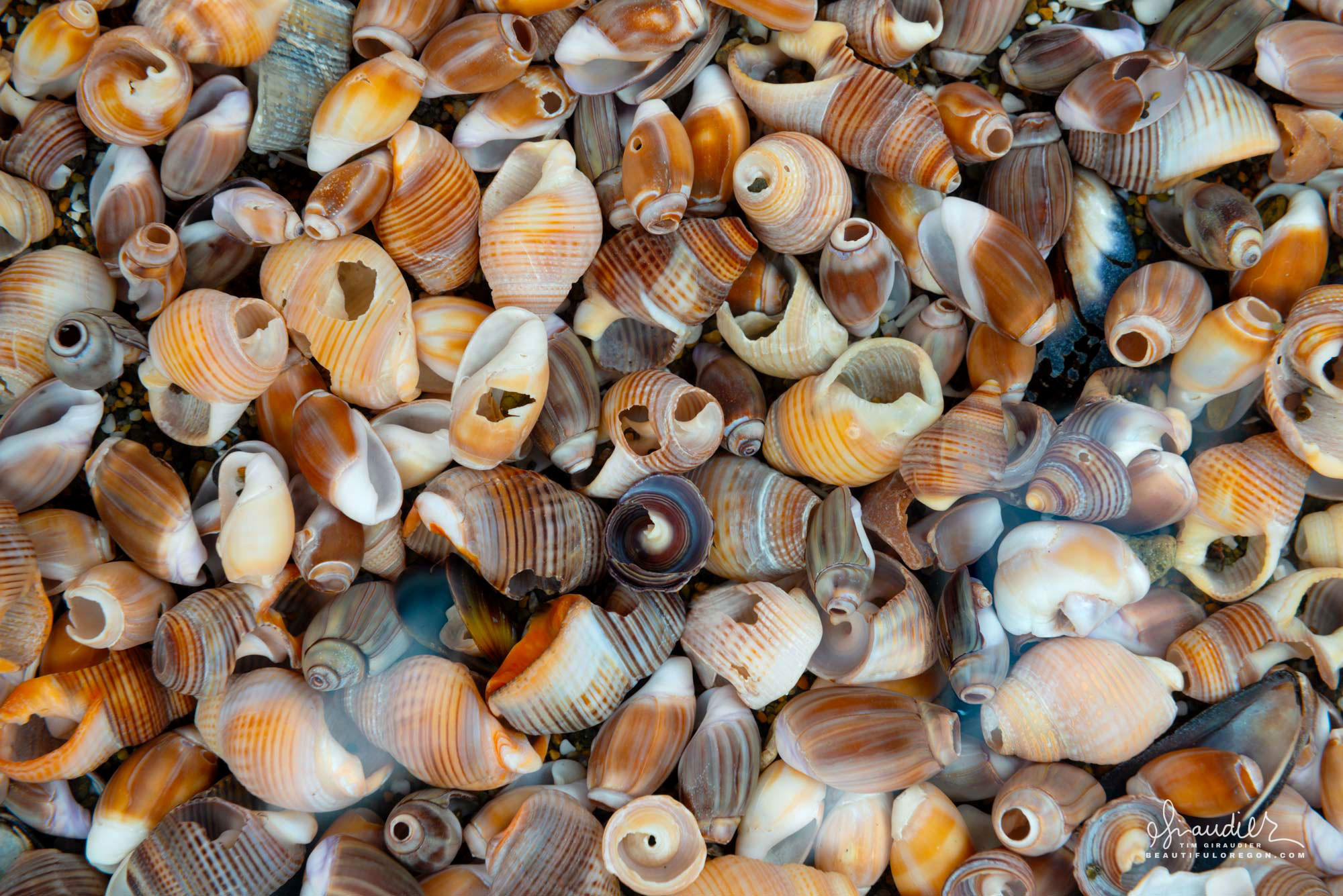 Oregon Tide Pool Seashells
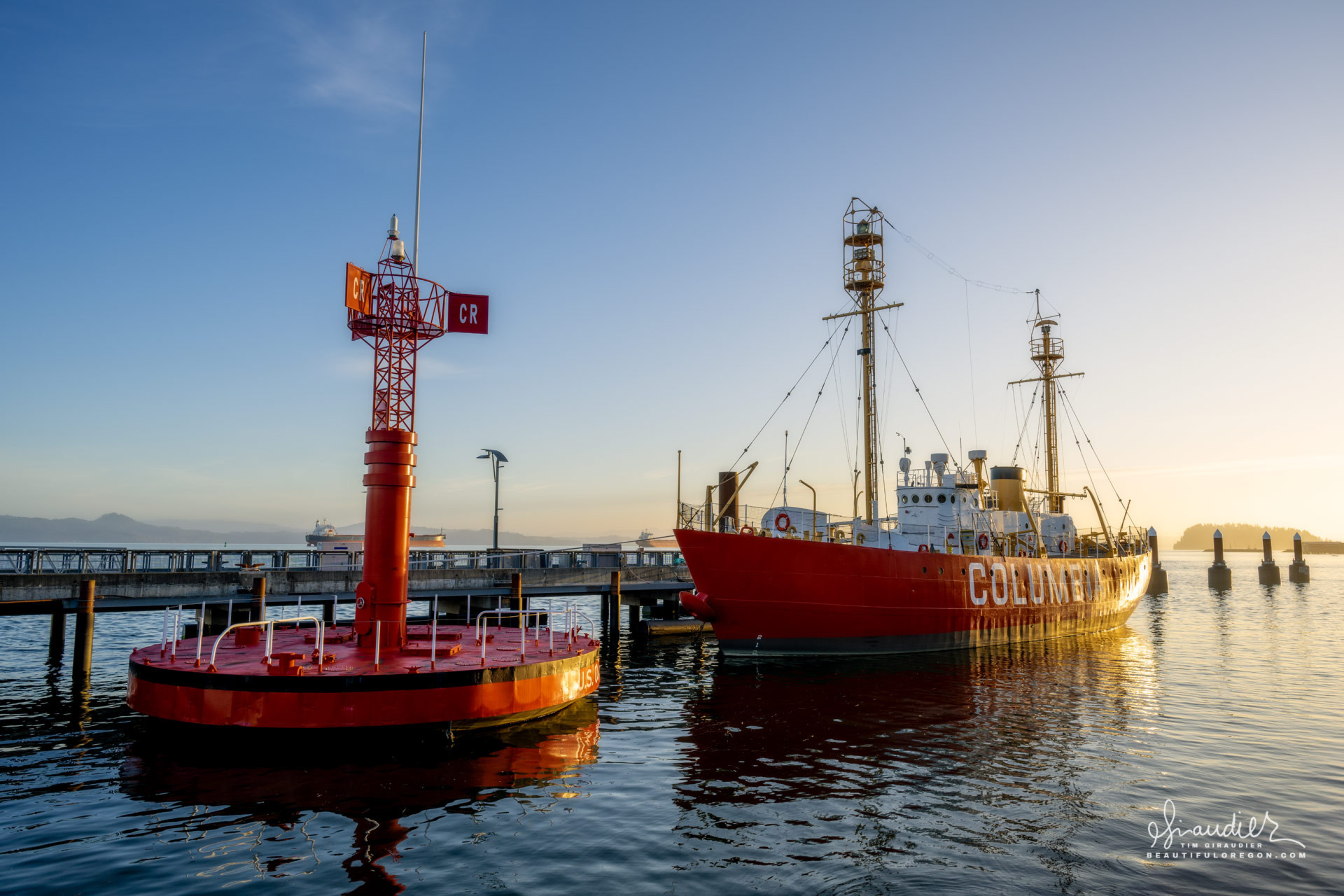 Columbia River Maritime Museum and the Lightship Columbia
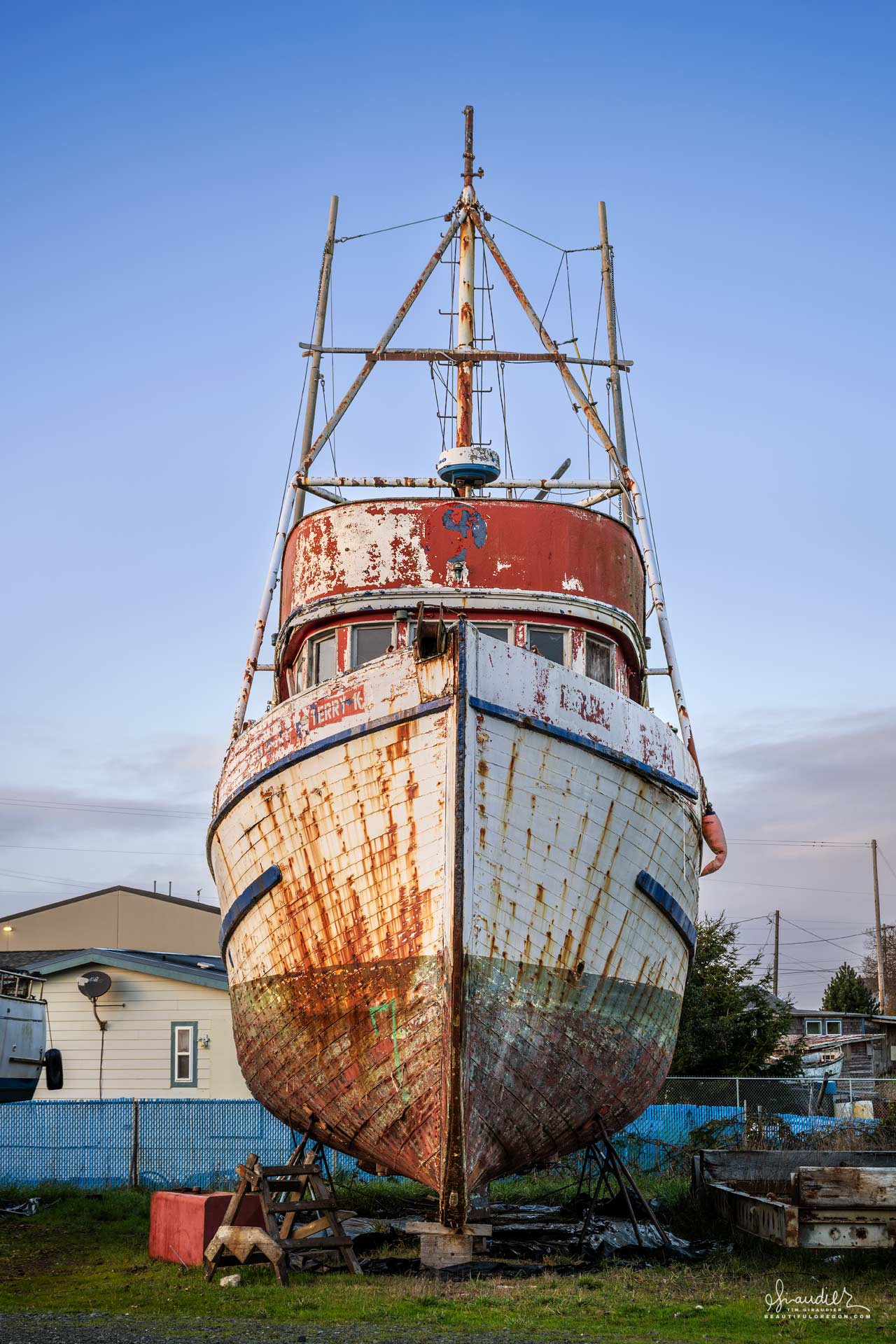 Salmon troller, Charleston Boat Basin
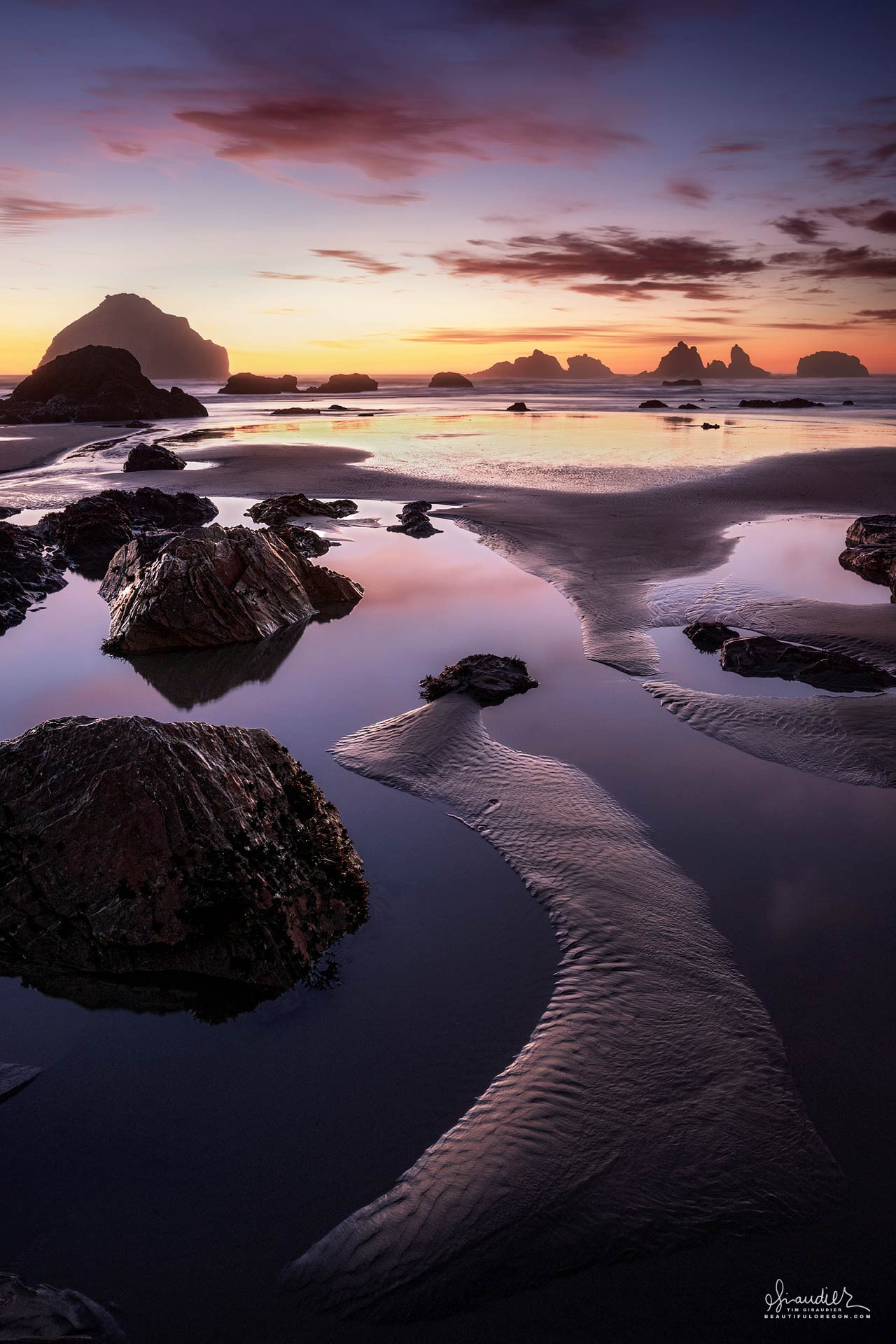 Face Rock Bandon Beach – Oregon South Coast